
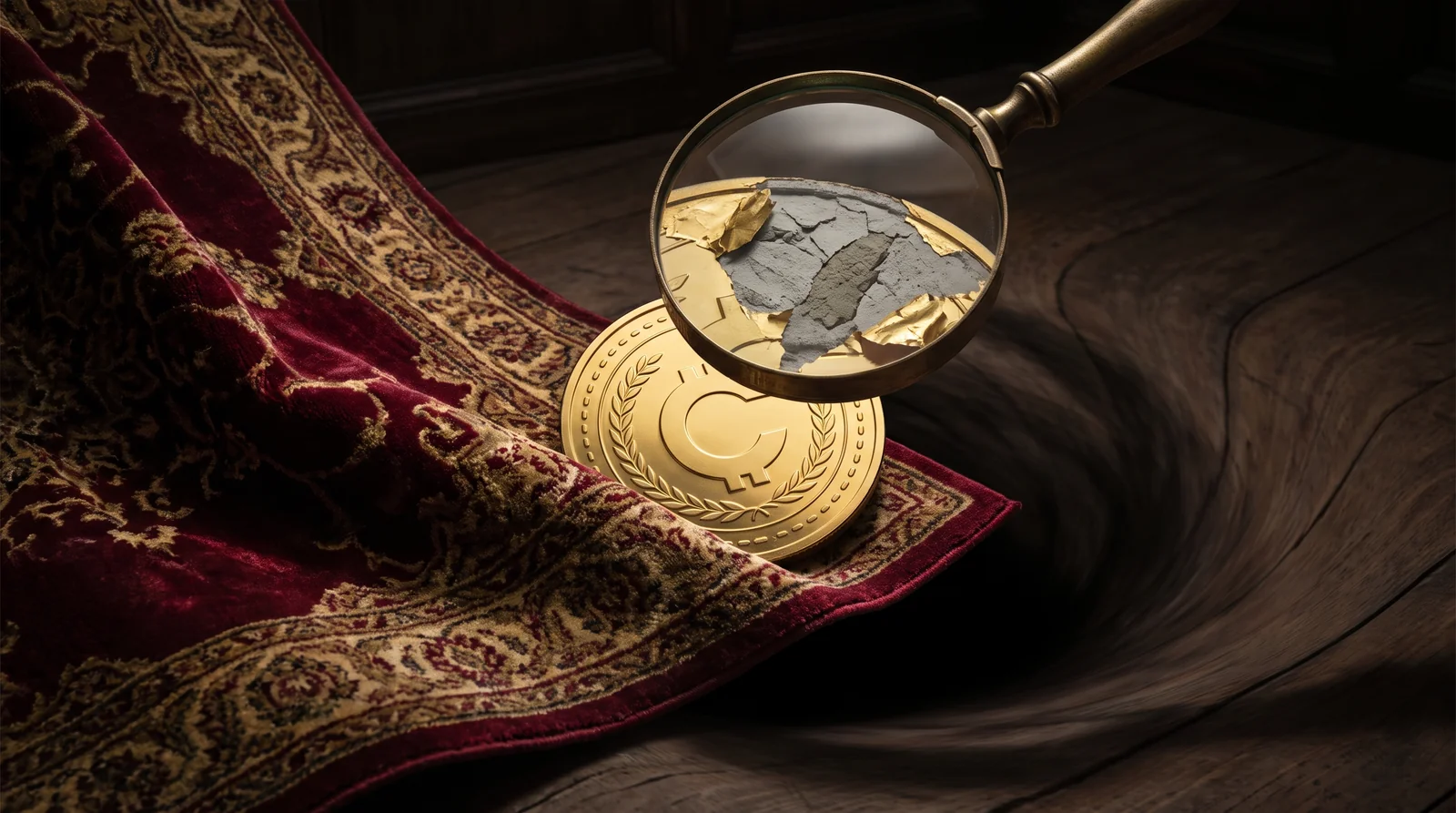
A rug pull is when a crypto project's developers drain the liquidity from a token and vanish with investor money.
A rug pull is when a crypto project's developers drain the liquidity from a token and vanish with investor money. It is one of the most common scams in crypto,
1. Anonymous or Fake Team Members
A legitimate crypto project has real people with real reputations on the line. When founders and developers are doxxed, they have something to lose if the project goes south. Rug pulls almost always hide behind pseudonyms, stock photo avatars, or AI-generated headshots. Run a reverse image search on the team photos using Google Images or TinEye. If the "CTO's" headshot shows up on a stock photography website, you are looking at a scam. If the team members have zero LinkedIn history, no prior projects, and no verifiable credentials, proceed with extreme caution. Some red flags to watch for: - Team bios are vague and use generic language like "experienced blockchain developer" without naming specific companies or projects - Social media accounts were created weeks or months before the token launch - The team has no presence at crypto conferences, podcasts, or public events - When you ask direct questions in their Discord, moderators dodge or ban you Legitimate teams are proud of their work and willing to put their names behind it. If the team is invisible, your money probably will be too.
2. Unaudited or Copy-Paste Smart Contracts
A smart contract is the code that governs how a token operates. If it has not been audited by a reputable third-party firm, you are trusting code that nobody has independently verified for exploits. This is like buying a house without ever looking inside. Top audit firms include CertiK, Trail of Bits, Hacken, OpenZeppelin, and Consensys Diligence. An audit does not guarantee safety, but the absence of one is a major warning sign. Many rug pulls deploy contracts with hidden functions that let the developer mint unlimited tokens, blacklist wallets, or drain the liquidity pool. Even worse is a contract that is a direct copy of another project with only the token name changed. Scammers take proven rug pull code, tweak the name and ticker, and deploy it as a new token. You can check if a contract is a copy by searching its source code on Etherscan or BscScan. If the code matches dozens of other tokens, walk away.
3. Suspicious Tokenomics You Cannot Trust
Tokenomics is the economic design of a token. Rug pulls often allocate 60 to 90 percent of the total supply to the team, a single deployer wallet, or a small group of insiders. When one wallet controls most of the supply, that wallet can crash the price to zero in a single transaction. Check platforms like CoinGecko, DexScreener, or Bubblemaps for top holder concentration. If one wallet holds more than 10 percent of the total supply, proceed with extreme caution. Pay special attention to wallets that received tokens at launch through presale or airdrop allocations. If the team's tokens are not subject to a vesting schedule, they can sell everything the moment the price rises. Other tokenomics red flags include: - An excessively large supply with trillions of tokens, which creates a false impression of being "cheap" - Tax structures that are unusually high on buys or sells, funneling money to team wallets - Hidden transaction fees that siphon small amounts from every trade
4. Liquidity That Is Not Locked
Liquidity is the pool of funds that allows people to buy and sell a token on a decentralized exchange. In a rug pull, the team deposits liquidity, waits for the price to rise as buyers pile in, and then withdraws the entire pool. The token becomes worthless because nobody can sell it. You can check if liquidity is locked using tools like RugDoc, DEXTools, or the lock information on Uniswap or PancakeSwap. Look for a liquidity lock with a duration of at least six months. A lock of 30 days or less is essentially meaningless because the team can simply wait it out. Some projects claim their liquidity is locked but provide no verifiable proof. Always check the actual lock contract on-chain. If the team says "trust us," that is the opposite of what decentralized finance is supposed to be about. ChangeNOW lets you swap verified tokens without connecting your wallet, which adds a useful layer of safety when you are moving between established cryptocurrencies.
5. Marketing That Promises the Impossible
If a project promises guaranteed returns, daily passive income, or 100x gains, it is lying. Legitimate projects talk about their technology, their use case, and the problems they are solving. Scam projects talk about Lamborghinis, moon trips, and financial freedom. Watch out for these specific marketing tactics: - "Guaranteed 10x returns in 30 days" or similar fixed-percentage promises - Pressure to buy now because the "price will never be this low again" - Referral programs where you earn by bringing in new investors, which is the structure of a Ponzi scheme - Celebrity endorsements or paid promotions from influencers who do not disclose they were paid - Telegram and Discord groups where any criticism is immediately deleted and the questioner is banned Real projects do not need to make promises. Their code, their team, and their roadmap speak for themselves. If the marketing is louder than the technology, you are probably looking at a rug pull.
6. Social Media That Looks Manufactured
A rug pull project often has 50,000 followers but near zero genuine engagement. If every comment says the same thing in identical wording, the followers are bots. If a project has thousands of followers but the posts get three likes, something is wrong. Check for these signs of fake social media: - Follower counts that jump by thousands overnight without a corresponding increase in real activity - Comment sections where every reply is a generic phrase like "Great project!" or "To the moon!" - Twitter accounts that were created days before the token launch - Discord servers where most "members" have never posted a message - Telegram groups where the admin shares fake trading volume or fabricated partnership announcements Bybit lists only tokens that pass a strict vetting process, which can help you avoid tokens with manufactured social signals in the first place.
7. Contract Ownership That Is Not Renounced
When a smart contract is deployed, someone owns it. If that ownership is not renounced, the owner can change the rules of the token at any time. This includes the ability to mint new tokens, blacklist wallets, or change transaction fees to 100 percent. Check if the contract ownership has been renounced on Etherscan or BscScan by looking at the "Read Contract" section. If the owner address is still active and can mint tokens, the team can print infinite supply and crash the price. A renounced contract means no single entity can modify the token's rules after deployment. Note that even a renounced contract is not a guarantee of safety. The contract could still contain malicious functions that do not require ownership to execute. This is why audits and other checks matter alongside ownership verification.
Real-World Rug Pull Examples
Learning from history is the best protection. Here are some of the most notorious rug pulls that cost investors millions: Squid Game Token (SQUID) - November 2021 This token rode the hype of the popular Netflix show. The price surged over 23 million percent in a matter of days. Developers then drained the liquidity pool, taking approximately $3.4 million. The token dropped to zero instantly. The developers had locked in profits through a smart contract that prevented holders from selling while the team could. AnubisDAO - October 2021 AnubisDAO raised $60 million from investors in a presale. Within 24 hours, the entire liquidity was drained. The project had no product, no working code, and the team was completely anonymous. It remains one of the largest single-day rug pulls in crypto history. Frosties NFT - January 2022 The Frosties NFT project raised $1.3 million from buyers who were promised exclusive NFT art and future metaverse utility. Two days after the mint, the founders drained the project's Ethereum wallet and shut down the website. The DOJ later charged the founders with wire fraud. Baller Ape Club - October 2021 This NFT project collected $13 million from buyers before the founders shut down the website, deleted their social media accounts, and converted all the Ethereum to other cryptocurrencies. The FBI eventually arrested the lead developer. GCR (Terra) and associated rug pulls - May 2022 While not a traditional rug pull, the Terra/LUNA collapse wiped out approximately $40 billion in investor value. It demonstrated how quickly even large projects can unravel, and it led to increased regulatory scrutiny of stablecoins and DeFi projects. These examples show that rug pulls are not small-time scams. They target millions of dollars, and they happen fast.
Step-by-Step Due Diligence Checklist
Before you put money into any token, run through this checklist. Do not skip steps because you feel pressure to buy quickly. If the opportunity is real, it will still be there in an hour. Step 1: Verify the Team - Search each team member on LinkedIn and verify their work history - Check if they have been involved in previous crypto projects (search their wallet addresses on Etherscan) - Look for interviews, podcasts, or public appearances - If the team is anonymous, decide if you are comfortable losing 100 percent of your investment Step 2: Check the Smart Contract - Verify that the contract has been audited by a reputable firm (CertiK, Hacken, Trail of Bits, OpenZeppelin) - Read the audit summary to understand what was checked - Check for copy-paste contracts by searching the source code on Etherscan - Confirm contract ownership has been renounced on Etherscan or BscScan Step 3: Analyze Tokenomics - Check the top holder concentration on DexScreener or Bubblemaps - Verify that team tokens are subject to a vesting schedule - Look at the token distribution and confirm no single wallet holds more than 10 percent - Check the total supply and understand if the tokenomics make economic sense Step 4: Verify Liquidity - Check if liquidity is locked and for how long using RugDoc, DEXTools, or the lock information on the DEX - Confirm the lock duration is at least six months - Check the total value locked (TVL) in the liquidity pool - Verify the lock on-chain rather than trusting the team's claims Step 5: Evaluate the Marketing - Read the whitepaper and evaluate whether the project describes a real technology or just a lifestyle - Check if the team has made guaranteed return claims - Look for referral programs that reward bringing in new investors - Assess whether the marketing is louder than the product Step 6: Scrutinize Social Media - Check the age of social media accounts and the growth pattern - Look for genuine engagement, not just follower counts - Read the comments and look for bot-like behavior - Join the Discord or Telegram and observe the community for several days before investing
Tools to Check Token Safety
Several free tools exist to help you evaluate whether a token is safe. Use them every single time you consider a new investment. RugCheck.xyz RugCheck analyzes token contracts and gives you a safety score. It checks for ownership risks, tax structures, liquidity status, and holder concentration. Paste the token's contract address and read the results before buying anything. TokenSniffer TokenSniffer scans contracts for known vulnerabilities and compares them against a database of known scam patterns. It provides a score from 0 to 100, with lower scores indicating higher risk. DEXTools DEXTools provides real-time trading data, holder analysis, and liquidity information. It helps you see if a token has genuine trading activity or if the volume looks manipulated. Bubblemaps Bubblemaps visualizes token holder distribution as a bubble chart. If one giant bubble dominates the chart, one wallet controls most of the supply. This visual makes it easy to spot concentration risks at a glance. Etherscan and BscScan These block explorers let you read the smart contract source code, check holder addresses, verify contract ownership, and trace transactions. Learning to use a block explorer is one of the most valuable skills in crypto. De.Fi Scanner De.Fi provides a comprehensive security score for tokens across multiple chains. It checks for rug pull indicators, smart contract vulnerabilities, and honeypot patterns.
What to Do If You Suspect a Rug Pull
If you suspect a token is a rug pull, take these steps immediately: Stop buying. Do not put any more money into the token. Even if you are not sure, erring on the side of caution is always the right move. Document everything. Take screenshots of the project's website, social media accounts, Discord messages, and any promises made by the team. Save transaction hashes from your wallet. This evidence will be important if you file a report. Report the project. File a report with the FBI's Internet Crime Complaint Center (IC3) at ic3.gov, the SEC's Office of Whistleblower, or your country's equivalent agency. While recovery is unlikely, reports help law enforcement build cases against serial scammers. Alert the community. Post your findings in crypto forums and social media to warn others. The faster the community becomes aware, the fewer people get hurt. Do not engage with "recovery" services. If someone contacts you claiming they can recover your lost funds for a fee, they are running a secondary scam. Legitimate law enforcement will never ask you to pay to recover stolen funds.
How Rug Pulls Are Evolving
Scammers constantly adapt their tactics. Here are the newer patterns emerging in 2025 and 2026: Honeypot contracts A honeypot token lets you buy but prevents you from selling. The contract contains hidden logic that blocks sell transactions or imposes a 99 percent sell tax. RugCheck and TokenSniffer can detect many honeypot patterns, but new variants appear regularly. Slow drains Instead of draining all liquidity at once, some teams siphon small amounts over weeks or months. This makes the rug pull harder to detect because the token continues to function. Watch for projects where the liquidity gradually decreases or where the team's wallet balance grows steadily. Liquidity migration Some projects migrate their liquidity from one DEX to another, often to a less regulated or less monitored platform. This is sometimes legitimate, but it can also be used to move liquidity to a pool where the team retains the ability to withdraw. Social engineering Scammers now run elaborate social engineering campaigns. They build relationships with community members over months, earn their trust, and then exploit that trust when launching a new token. Always verify independently, even if someone you trust recommends a project. Delayed rug pulls Some projects operate legitimately for months or even years before rug pulling. The longer a project runs, the more trust it builds, and the larger the eventual theft. Never assume a project is safe just because it has been around for a while.
Pre-Trade Checklist
Before you put money into any token, run through this checklist: - Team is doxxed with real identities you can verify - Smart contract has a recent audit from a top-tier firm - Top single wallet holds less than 10 percent of total supply - Liquidity is locked for six months or longer - No guaranteed return promises in their marketing - Social media engagement looks real - Contract ownership is renounced - You have used at least two of the safety tools listed above to verify the token
Progress Tracker
Track your journey step by step. Click each one as you complete it.
Frequently Asked Questions
A rug pull is when a crypto project's developers drain the liquidity from a token and vanish with investor money.
A rug pull is when a crypto project's developers drain the liquidity from a token and vanish with investor money. It is one of the most common scams in crypto, and it disproportionately targets beginn