
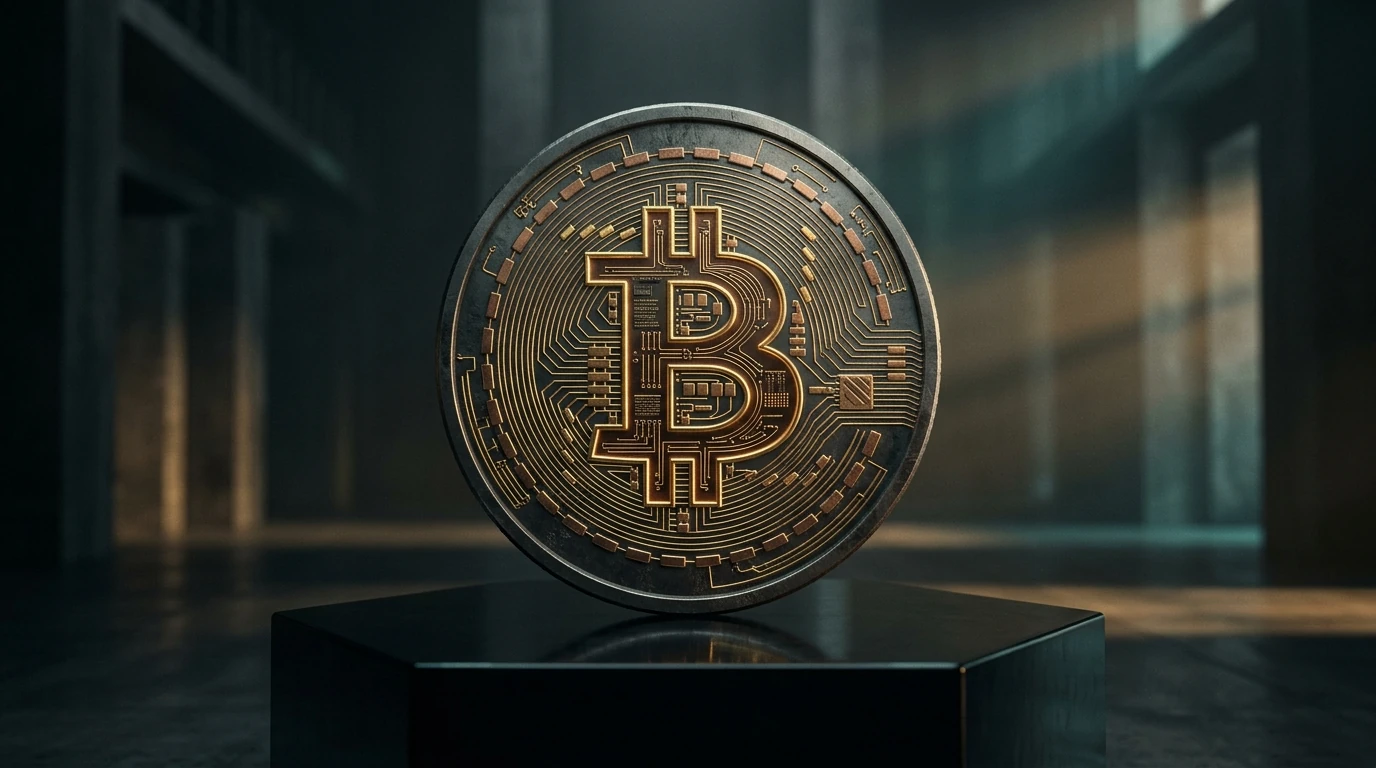
Bitcoin is a decentralized digital currency and global monetary network that allows two parties to transfer value directly without intermediaries.
Created in 2009 by Satoshi Nakamoto, Bitcoin solved the fundamental computer science puzzle known as the double-spending problem. Instead of trusting commercial banks or central governments to maintain ledger balances, Bitcoin uses a distributed network of independent computers. Every transaction is cryptographically signed with private keys, validated by full nodes, and permanently recorded onto an immutable blockchain secured by physical computational work.
The Origin & The Double-Spending Breakthrough
Before Bitcoin launched in January 2009, digital money had a fatal flaw known as the double-spending problem. In the digital world, any file (a photo, document, or MP3) can be copied and pasted infinite times at zero cost. If a digital dollar is just a computer file, what prevents someone from copying that dollar and spending it ten times simultaneously?
Traditional finance solved this by placing a centralized intermediary in the middle (like Visa, PayPal, or JPMorgan Chase). The bank keeps a master private ledger and manually deducts $10 from your balance when you make a purchase. However, this system requires complete trust in the bank, allows transactions to be frozen or censored, and excludes over 1.4 billion unbanked people globally.
On October 31, 2008, an anonymous programmer using the pseudonym Satoshi Nakamoto published a 9-page whitepaper titled "Bitcoin: A Peer-to-Peer Electronic Cash System." Nakamoto combined cryptographic hashing, distributed peer-to-peer networking, and proof-of-work consensus to create the first digital asset that cannot be duplicated or counterfeited, without needing any central authority.
Bitcoin created true digital scarcity for the first time in human history. It proved that value can be sent across the globe without relying on a corporate middleman.
How the Bitcoin Network Actually Works
When you send bitcoin to a friend, what actually happens behind the scenes?
- Transaction Creation: Your wallet software creates a digital message stating: "Transfer 0.05 BTC from my address to my friend's address." Your wallet signs this message using your secret private key.
- Mempool Broadcast: The signed transaction is broadcast to thousands of computers running the Bitcoin software worldwide. These computers verify your signature and place the transaction in a waiting room called the mempool.
- Mining & Block Inclusion: Specialized computers called miners bundle thousands of waiting transactions into a candidate block and race to solve a computational puzzle. The winning miner broadcasts the new block to the network.
- Full Node Verification: Every independent node checks the block against strict consensus rules (confirming no double-spends and valid signatures). Once verified, the block is appended to the blockchain, and your friend's wallet reflects the confirmed deposit.
Proof of Work & The Mining Engine
Bitcoin does not rely on promises; it relies on physics. Proof of Work (PoW) is the mechanism that secures the entire history of transactions against attackers.
Miners run specialized computer chips (ASICs) that perform trillions of mathematical guesses every second. They take the data from a candidate block, add a random number called a nonce, and run it through the SHA-256 cryptographic algorithm. The goal is to find a hash output that begins with a specific number of zeroes.
Finding this correct number is purely a game of computational chance: it requires billions of calculations and real electricity. However, once a miner finds the solution, any computer on Earth can verify it in less than a millisecond. The miner is rewarded with newly minted bitcoin (the block subsidy) plus the transaction fees included in that block.
The Hard-Coded 21 Million Scarcity & Halving Cycles
Unlike government fiat currencies (like the US dollar or euro), which can be printed in unlimited quantities by central banks, Bitcoin has a strictly capped supply.
There will only ever be 21,000,000 bitcoins created. The issuance schedule is hard-coded into the Bitcoin software and reduces over time through an event known as the Halving:
- 2009 to 2012: 50 BTC minted per block.
- 2012 to 2016: 25 BTC minted per block (1st Halving).
- 2016 to 2020: 12.5 BTC minted per block (2nd Halving).
- 2020 to 2024: 6.25 BTC minted per block (3rd Halving).
- 2024 to 2028: 3.125 BTC minted per block (4th Halving).
- By year 2140: The final satoshi will be minted, and miners will be compensated entirely by transaction fees.
Because new supply cuts in half every four years (210,000 blocks) while adoption expands, Bitcoin acts as a disinflationary store of value.
Private Keys, Seed Phrases & Self-Custody
When you own Bitcoin, you do not physically store digital coins on a USB drive or your laptop. All bitcoin lives on the shared public blockchain. What you own is the secret cryptographic key that unlocks those coins.
Your setup consists of three core components:
- Public Address: Like an email address or bank IBAN. You share this freely with anyone who wants to send you bitcoin.
- Private Key: A secret 256-bit number. If someone has your private key, they have complete control over your funds.
- Seed Phrase (Recovery Phrase): A human-readable list of 12 or 24 English words (standardized by BIP-39). This phrase can recreate all your private keys on any wallet device if your phone or computer is lost or destroyed.
The golden rule of crypto is: "Not your keys, not your coins." If you leave your bitcoin on a centralized exchange, you do not own the keys; you own an IOU.
Scaling Bitcoin: The Lightning Network
Because Bitcoin prioritizes decentralization and security above all else, its base layer processes approximately 7 transactions per second (TPS). This intentional design ensures that everyday users can run full verification nodes on affordable hardware.
To support billions of daily commercial transactions without congesting the main blockchain, Bitcoin uses Layer 2 payment channels called the Lightning Network.
How Lightning works: Two parties open a private, off-chain payment channel secured by a 2-of-2 multi-signature contract on the Bitcoin mainnet. Once open, they can send thousands of payments back and forth instantly for fractions of a cent, with zero blockchain congestion. When finished, they close the channel and record the final net balance on the Bitcoin base blockchain.
Bitcoin vs Gold vs Fiat vs Altcoins
To understand Bitcoin's role as "Digital Gold," compare its fundamental monetary properties with traditional asset classes:
| Property | Bitcoin (BTC) | Physical Gold | Fiat Currency (USD/EUR) | Altcoins (ETH/SOL) |
|---|---|---|---|---|
| Supply Cap | Fixed at 21,000,000 | Unknown (mined continuously) | Infinite (printed by central banks) | Dynamic or variable supply |
| Verifiability | Instant on home computer | Requires chemical assay / scales | Counterfeit detection tools | Instant on node/explorer |
| Portability | Carry billions in your head (12 words) | Heavy, expensive armored transport | Electronic bank limits, cash borders | Digital wallet transfer |
| Divisibility | 8 decimals (100M satoshis per BTC) | Difficult to divide for micro-trades | 2 decimals (cents) | 9 to 18 decimals |
| Censorship Resistance | High (permissionless network) | High for physical, low for paper gold | Zero (bank accounts frozen at will) | Variable by validator set |
| Track Record | 17+ years 99.99% uptime | 5,000+ years monetary history | Averages 30-50 years per currency | 5 to 10 years |
Real-World Risks, Volatility & Environmental Context
Before acquiring Bitcoin, every investor must understand its inherent risks:
- Short-Term Price Volatility: Bitcoin is an emerging asset experiencing major market cycles. Drawdowns of 50% to 75% have occurred in past bear markets. Never invest emergency funds or money needed in the next three years.
- Irreversible User Errors: Blockchain transactions cannot be reversed. If you send bitcoin to an incorrect address or fall for a phishing scam, no central authority can recover your funds.
- Hardware & Seed Phrase Loss: If you fail to write down your 12 or 24-word backup phrase on paper or steel, a damaged device means permanent asset loss.
- Energy Consumption Realities: Bitcoin mining consumes substantial electrical power. However, modern mining increasingly operates on stranded hydroelectricity, geothermal energy, and flared natural gas, driving renewable energy infrastructure investment.
How to Buy and Store Bitcoin Safely in 2026
Follow this battle-tested 4-step security framework to purchase and protect your bitcoin:
- Choose a Regulated Exchange: Buy through reputable platforms like Kraken or Coinbase (or Bybit / Binance outside the US). Complete identity verification (KYC) and secure your account with a hardware security key (YubiKey) or authenticator app (never SMS 2FA).
- Purchase in Small Increments: Use Dollar-Cost Averaging (DCA), buying fixed amounts (e.g. $50 weekly) to smooth out market volatility.
- Set Up a Hardware Cold Storage Wallet: For holdings over $500, transfer funds off the exchange to a dedicated hardware wallet like Ledger or Trezor.
- Secure Your Recovery Phrase Offline: Write your 12 or 24-word phrase on paper or stamp it into a stainless steel plate. Never take a digital photo, never save it in cloud notes, and never type it into any keyboard on an internet-connected device.
Investor Checklist: Bitcoin Self-Custody Best Practices
Review this 8-point security checklist to ensure your Bitcoin holdings are completely safeguarded:
- ✓ Non-Custodial Cold Storage: Is your primary bitcoin balance stored on a dedicated hardware wallet rather than an exchange?
- ✓ Offline Physical Backup: Is your seed phrase written on physical medium stored in a fireproof/waterproof safe?
- ✓ Zero Digital Footprint: Have you confirmed that your seed phrase has never been photographed, typed into a computer, or uploaded to cloud storage?
- ✓ App-Based / Hardware 2FA: Are all your exchange and email accounts protected with authenticator apps or YubiKeys?
- ✓ Test Transaction Verification: Did you test a small transaction ($10) before sending your full balance to cold storage?
- ✓ On-Device Address Verification: Do you verify destination addresses on your hardware wallet's physical screen before confirming transfers?
- ✓ Inheritance Plan: Does a trusted family member or legal executor know how to access your physical backup in an emergency?
- ✓ Personal Full Node: (Advanced) Have you paired your wallet to your own Bitcoin full node (e.g. Umbrel or Start9) for 100% financial privacy?
Bitcoin grants you complete sovereign ownership of your wealth, paired with complete personal responsibility.
Core Monetary Pillars
The fundamental properties that distinguish Bitcoin from traditional fiat currencies and centralized payment networks.
Decentralized Architecture
No single government, corporation, or individual controls the network. Thousands of independent full nodes validate transactions across the globe, eliminating single points of failure.
Hard-Coded 21M Scarcity
There will only ever be 21,000,000 bitcoins in existence. The issuance schedule is enforced strictly by mathematical consensus, creating predictable disinflationary monetary policy.
Censorship-Resistant Value
Anyone with an internet connection can send and receive payments peer-to-peer. Transactions cannot be blocked, reversed, or confiscated by third parties when self-custodied.
Transparent & Verifiable
Every transaction since the Genesis Block in 2009 is public. Any individual can run a free node on a home computer to verify the total supply and rule enforcement.
Match the Terms
Connect each foundational concept with its operational meaning.
Key Concepts
Master the six essential building blocks powering the Bitcoin monetary network.
The Blockchain
An append-only chain of cryptographic blocks containing verified transaction batches. Every block references the hash of the preceding block, making alteration computationally impossible.
Myth or Fact?
Test your instincts on Bitcoin myths versus technological facts.
Bitcoin is sound, sovereign money engineered for a borderless digital world.
By replacing institutional trust with mathematical rules and thermodynamic proof of work, Bitcoin provides a censorship-resistant, disinflationary store of value. Learn the fundamentals, secure your private keys, and practice self-custody.